SHARE

Roofing CRM vs Estimating Software in 2026: 7 Things Calgary Roofers Must Know Before Choosing Software
TL;DR
When comparing Roofing CRM vs Estimating Software, it is important to understand that they solve different business problems. Estimating software focuses on measurements, materials, labor costs, and pricing, while a roofing CRM manages leads, customer communication, scheduling, job tracking, and follow-ups. Many roofing companies eventually need a connected system that combines both functions to improve efficiency, reduce manual work, and support long-term growth.
Roofing companies often start looking for software because their existing process is becoming difficult to manage.
Leads are stored in spreadsheets. Estimates are created manually. Customer information is scattered across emails, phone calls, and documents. Teams spend time searching for information instead of completing work.
As the business grows, these challenges become more noticeable.
That is why many contractors begin researching Roofing CRM vs Estimating Software.
The problem is that these two software categories are often confused, even though they serve different purposes.
Understanding the difference can help Calgary roofing companies choose a solution that supports both current operations and future growth.
Table of Contents
What Is the Difference Between Roofing CRM and Estimating Software?
The main difference is simple.
Estimating software helps contractors calculate project costs and create proposals. A roofing CRM helps manage customer relationships and operational workflows.
Estimating software typically focuses on:
- Roof measurements
- Material calculations
- Labor costs
- Waste factors
- Proposal generation
- Project pricing
A roofing CRM typically focuses on:
- Lead management
- Customer communication
- Appointment scheduling
- Sales pipeline tracking
- Job progress updates
- Follow-up management
- Reporting and visibility
| Roofing CRM | Estimating Software |
|---|---|
| Lead tracking | Material calculations |
| Customer communication | Roof measurements |
| Scheduling | Labor costing |
| Follow-ups | Proposal creation |
| Job management | Cost estimation |
| Reporting | Quantity takeoffs |
The important point is that estimating software helps create accurate quotes, while CRM software helps manage everything before and after the estimate is delivered.
Why Are More Roofing Companies Looking Beyond Standalone Estimating Tools?
Accurate estimates are important, but estimating is only one step in the roofing process.
A typical roofing project includes:
- Lead generation
- Initial contact
- Inspection scheduling
- Roof measurement
- Estimate preparation
- Proposal delivery
- Customer follow-up
- Contract approval
- Production scheduling
- Project completion
- Invoicing
- Warranty tracking
Estimating software handles only a portion of this workflow.
The remaining activities involve communication, scheduling, production coordination, customer service, reporting, and operational management.
Many roofing businesses eventually discover that operational efficiency depends on how well these activities work together.
This is where workflow management becomes increasingly important.
How Does Calgary’s Roofing Market Influence Software Requirements?
Calgary presents unique operational challenges for roofing contractors.
Weather events, seasonal demand, insurance-related projects, and fluctuating workloads require roofing companies to stay organized and responsive.
For example, hailstorms can generate a large number of inquiries within a short period.
When this happens, roofing companies need a process for:
- Tracking incoming leads
- Managing inspections
- Organizing customer information
- Documenting property damage
- Scheduling crews
- Following up with homeowners
Without a centralized system, managing this volume of activity can become difficult.
The goal is not simply to create estimates faster.
The goal is to maintain visibility across the entire customer journey.
What Problems Occur When Roofing Businesses Use Disconnected Systems?
Many roofing companies rely on multiple spreadsheets, apps, documents, and manual processes.
While this may work initially, problems often appear as operations become more complex.
Repeated Data Entry
Customer information may need to be entered multiple times across estimates, work orders, invoices, and reports.
This increases administrative work and creates opportunities for errors.
Limited Visibility
Sales teams, office staff, and production crews may not always have access to the same information.
This can create communication gaps and delays.
Inconsistent Reporting
Business owners often struggle to answer questions such as:
- How many leads converted this month?
- Which sales representatives perform best?
- Which projects generate the highest profit?
- How quickly are estimates being delivered?
When information exists in multiple locations, reporting becomes more difficult.
Missed Follow-Ups
Potential customers may not receive timely communication if follow-up activities depend on manual reminders.
Small process gaps can result in lost opportunities.
Why Are More Roofing Companies Considering Custom Roofing Software?
Every roofing company develops its own way of operating.
Over time, businesses create unique workflows, approval processes, reporting requirements, production stages, and customer communication procedures.
The challenge is that generic software is designed for a broad audience.
As a result, companies often create workarounds to make the software fit their operations.
These workarounds frequently include:
- Manual spreadsheets
- Duplicate data entry
- Additional tracking systems
- Separate reporting processes
- Custom documentation procedures
Custom roofing software takes a different approach.
Instead of asking the business to adjust its workflow, the software is built around the way the business already operates.
This allows companies to create systems that support their actual processes rather than forcing teams to adapt to software limitations.
How Can Custom Roofing Software Improve Operations?
Custom roofing software can centralize multiple business functions into a single system.
Instead of switching between multiple tools, teams can access information from one location.
A custom solution can support:
- Lead management
- Estimating workflows
- Customer communication
- Scheduling
- Job tracking
- Production management
- Reporting
- Document storage
- Internal approvals
This approach helps reduce manual work while improving operational visibility.
Business owners gain access to real-time information without relying on multiple spreadsheets or disconnected reports.
As a result, decision-making becomes faster and more accurate.
What Role Does AI Automation Play in Roofing Software in 2026?
AI is becoming increasingly important in operational software.
However, the greatest value does not come from replacing employees.
It comes from reducing repetitive work.
Custom roofing software can support AI-powered automation, such as:
- Lead qualification
- Customer follow-up reminders
- Document processing
- Internal alerts
- Job status notifications
- Automated reporting
- Workflow routing
- Performance monitoring
These capabilities help teams spend less time on administrative tasks and more time on revenue-generating activities.
For roofing companies managing a growing volume of projects, automation can create significant operational improvements.
What Features Matter Most When Comparing Roofing CRM vs Estimating Software?
The best software decision should be based on business requirements rather than feature checklists.
The following capabilities typically provide the greatest long-term value.
Lead Management
Every inquiry should be tracked from first contact through project completion.
Estimating Accuracy
Accurate measurements, material calculations, labor costs, and pricing directly influence profitability.
Workflow Automation
Routine administrative tasks should be automated whenever possible.
Mobile Accessibility
Field teams need access to project information, photos, notes, and updates while working on-site.
Reporting and Dashboards
Business leaders need visibility into performance, revenue, sales activity, and project progress.
Document Management
Contracts, inspection reports, photos, warranties, and customer records should be stored in one place.
Scalability
Software should support future growth without requiring major operational changes.
Should You Choose Roofing CRM, Estimating Software, or a Custom Solution?
The answer depends on your current challenges.
If your primary concern is creating faster and more accurate estimates, estimating software may address your immediate need.
If your challenges involve lead management, customer communication, scheduling, job tracking, and operational visibility, a roofing CRM may provide greater value.
However, many roofing companies eventually realize that the larger challenge is not estimating or customer management alone.
The real challenge is operational fragmentation.
When information is spread across multiple systems, teams spend more time managing processes and less time serving customers.
This is why many roofing businesses are moving toward custom software solutions that bring estimating, customer management, scheduling, reporting, workflow automation, and operational visibility into one centralized platform.
Conclusion
The Roofing CRM vs Estimating Software decision is about more than technology. It is about how efficiently your roofing business operates.
Estimating software helps generate accurate proposals. CRM software helps manage customer relationships and workflows. As roofing companies grow, disconnected systems often create inefficiencies that affect productivity, visibility, and profitability.
The most effective long-term approach is to evaluate how your business actually works and determine whether a connected, custom-built solution can bring estimating, customer management, scheduling, reporting, and automation together in one place.
If you are evaluating roofing software Calgary contractors can rely on for long-term operational growth, let’s talk about how Diligentic Infotech can help build software designed around your roofing business, your workflows, and your future goals.
FAQ’s
What is a roofing CRM?
A roofing CRM is software that helps contractors manage leads, customer communication, scheduling, sales activities, and project information throughout the customer lifecycle.
What is roofing estimating software?
Roofing estimating software helps calculate material quantities, labor costs, measurements, and project pricing to create accurate estimates.
Do roofing companies need both CRM and estimating software?
Many roofing companies benefit from having both capabilities because estimating handles project pricing while CRM manages customer relationships and operational workflows.
Why is workflow management important for roofing contractors?
Workflow management helps ensure that leads, estimates, projects, customer communication, and production activities remain organized and visible.
Why are roofing companies investing in custom software?
Custom software allows businesses to create systems that align with their specific workflows, reporting needs, approval processes, and operational goals.
Can AI improve roofing operations?
Yes. AI can help automate repetitive administrative tasks such as reporting, document processing, follow-ups, notifications, and workflow management.
About the author
Ajay Kumar
Founder and Director
About the author
Ajay Kumar is the founder and director of Diligentic Infotech, a Calgary AI automation company. He has 9+ years of hands-on technical experience and now focuses on helping small and medium businesses connect their existing tools and cut down manual work through practical AI automation. He leads with a clear focus on real, working solutions over one-time demos.
Posted on 9 Sep 2026
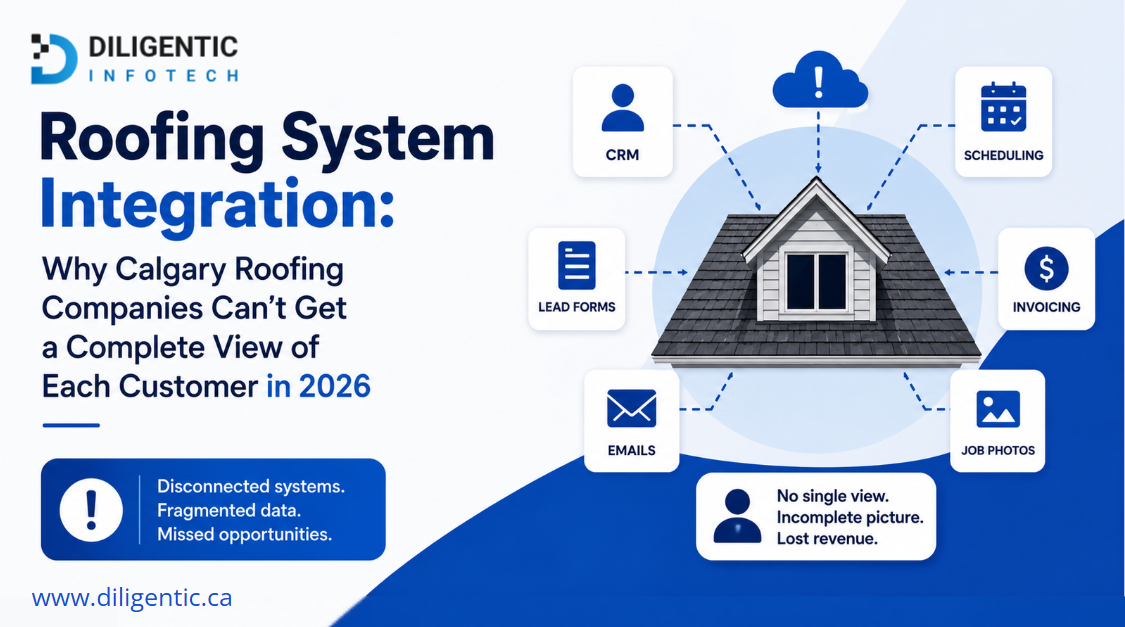
Roofing System Integration: Why Calgary Roofing Companies Can’t Get a Complete View of Each Customer in 2026
Roofing system integration connects the software a roofing company already uses so relevant customer and job information can move between systems instead of remaining scattered. For Calgary roofing companies, the goal is not to force the entire business into one platform. It is to make the right information available when employees need it.
Posted on 21 Aug 2026
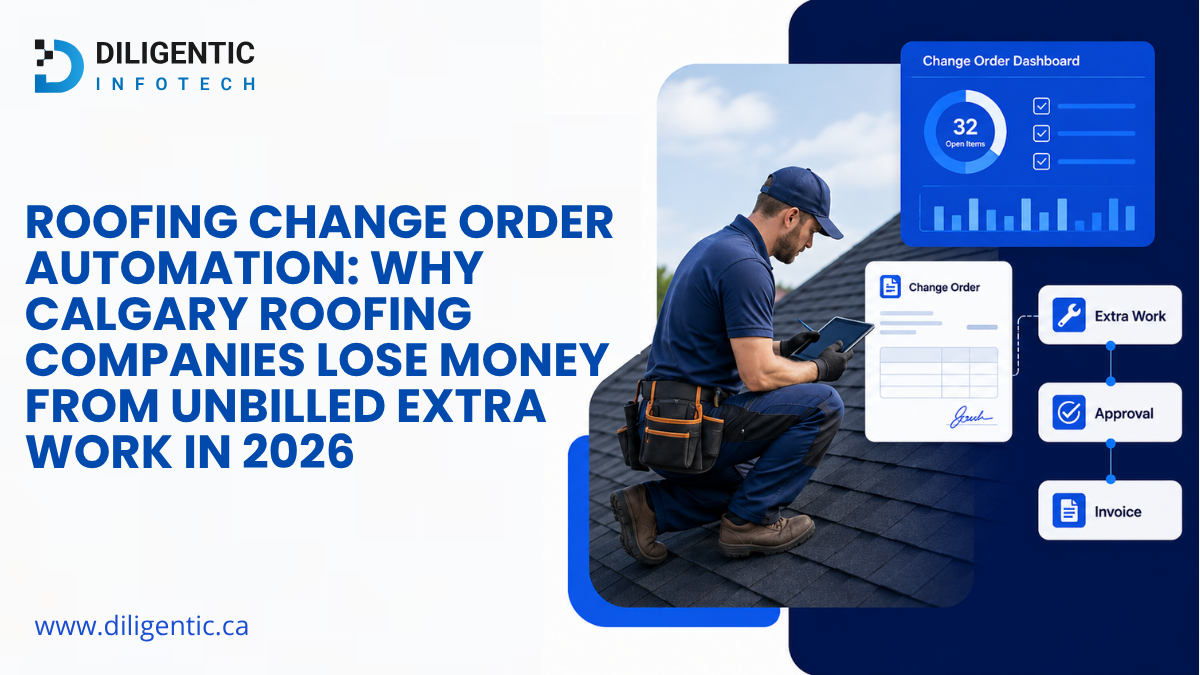
Roofing Change Order Automation: Why Calgary Roofing Companies Lose Money From Unbilled Extra Work in 2026
Roofing companies can lose revenue when crews complete chargeable extra work but that work is not consistently documented, reviewed, approved, communicated to the office, and included in billing. Roofing change order automation helps connect field information, job records, approvals, and invoicing workflows so additional work has a defined path from the job site to the appropriate invoice.
Posted on 13 Aug 2026
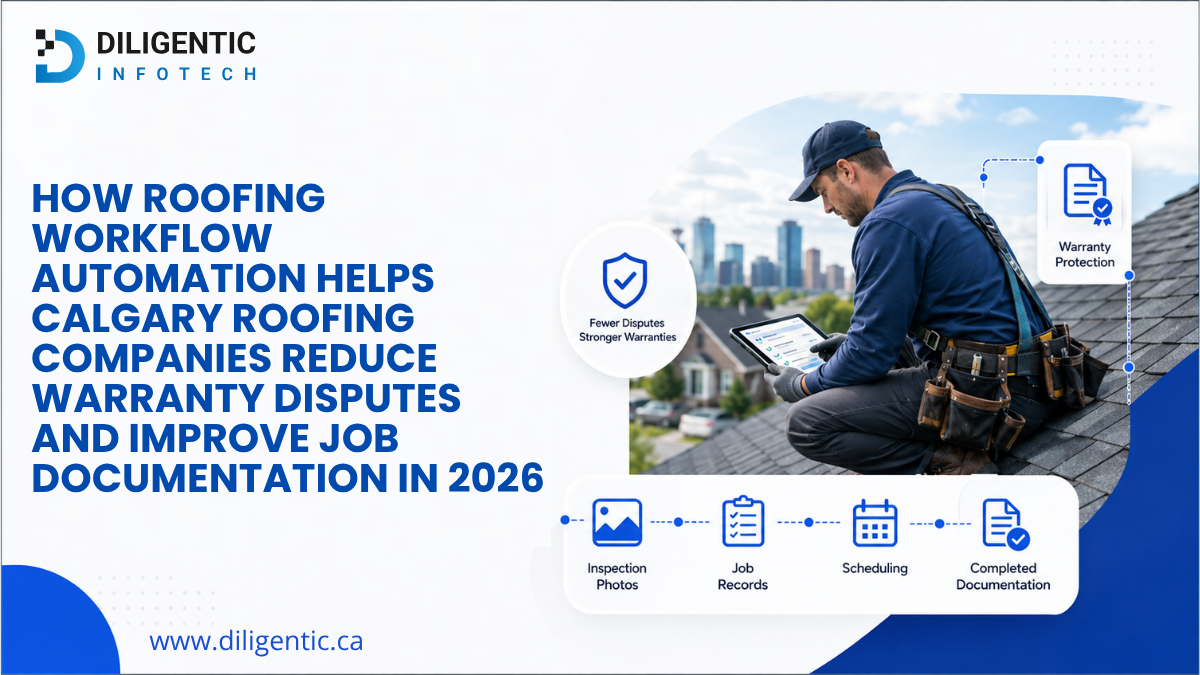
How Roofing Workflow Automation Helps Calgary Roofing Companies Reduce Warranty Disputes and Improve Job Documentation in 2026
Roofing workflow automation can reduce the risk of warranty disputes by keeping estimates, photos, material records, change orders, inspections, and customer approvals attached to the same job. It also helps crews and office teams collect missing information before a job closes.